
This article discusses the idea that U.S. public policies tend to focus on promoting marriage and healthy relationships rather than researching and educating citizens about gender-based violence in teen dating relationships. Violence between intimate partners and teens is prevalent and affects women and girls more than it does men. When public policy doesn't recognize the gender aspect of violence, it shifts the focus away from the safety and well-being of women and girls.
Children with depressed parents are 4 times more likely to develop depression themselves. This study focuses on the effects of a Preventive Intervention Program in Chile. The program focuses on increasing resilience in children and positive interactions within family.
Funded by the William T. Grant Foundation and Virginia B. Toulmin Foundation in two phases, they describe APT's strengths as an evaluation and program quality measure for out-of-school (OST) programs, a tool that is critical for program directors and policymakers who need to identify where to improve and how to support those improvements within OST programs. In addition, the online, video-based training developed in the second phase to increase reliability of APT raters showed promise, such that the most high priority APT quality areas were found to be the most improved (i.e., most accurate) scores post training.
 Research shows that people cannot reach their full potential unless they are in healthy connection with others. Dr. Amy Banks teaches us how to rewire our brains for healthier relationships and happier, more fulfilling lives.
We all experience moments when we feel isolated and alone. A 2006 Purdue University study found that twenty-five percent of Americans cannot name a single person they feel close to. Yet every single one of us is hardwired for close relationships. The key to more satisfying relationships-be it with a significant other, a family member, or a colleague-is to strengthen the neural pathways in our brains that encourage closeness and connection. In this groundbreaking book, Dr. Banks give us a road map for developing the four distinct neural pathways in the brain that underlie the four most important ingredients for close relationships: calmness, acceptance, emotional resonance, and energy. Wired to Connect gives you the tools you need to strengthen the parts of your brain that encourage connection and to heal the neural damage that disconnection can cause.
Available for purchase at: Wired to Connect: The Surprising Link Between Brain Science and Strong, Healthy Relationships
Firms play a central role in the selection, sponsorship, and employment of skilled immigrants entering the United States for work through programs like the H-1B visa. This role has not been widely recognized in the literature, and the data to better understand it have only recently become available. This chapter discusses the evidence that has been assembled to date in understanding the impact of high-skilled immigration from the perspective of the firm and the open areas that call for more research. Since much of the US immigration process for skilled workers rests in the hands of employer firms, a stronger understanding of these implications is essential for future policy analysis, particularly for issues relating to fostering innovation.
We study the impact of skilled immigrants on the employment structures of US firms using matched employer-employee data. Unlike most previous work, we use the firm as the lens of analysis to account for greater heterogeneity and the fact that many skilled immigrant admissions are driven by firms themselves(e.g., the H-1B visa). OLS and IV specifications show rising overall employment of skilled workers with increased skilled immigrant employment by the firm. Employment expansion is greater for young natives than for their older counterparts. The departure rates for older workers relative to younger workers appear highest for those in STEM occupations.
Juveniles are more likely to come into contact with the criminal or juvenile justice systems in the U.S. as victims than as offenders. Yet, except in the case of child victims of sexual abuse at hands of a family member, juveniles as victims still receive little attention in the criminal justice literature. And, for the most part, the actors in the justice system in the U.S. have not been given the skills, tools, and resources to effectively deal with juveniles, especially teenaged youth, as victims. Furthermore, policing of domestic sex trafficking of youth has focused on police response at later stages of sex trafficking (when such a crime is clearly identified) and the role of the police in coordinated response teams and building cases against the perpetrators including 'pimps.' This article offers evidence from research on commercial sexual exploitation of adolescents to examine police interactions with youth who are at a high risk for or on the pathway into domestic sex trafficking, and identifies prevention and interdiction strategies. Notably, these strategies reflect the connection of police responses to domestic violence, youth status offenses, and homeless teens.
PURPOSE: We examine whether the Shifting Boundaries (SB) intervention, a primary intervention to prevent youth dating violence and sexual harassment (DV/H), is differentially effective for girls compared with boys or for youth with a history of DV/H experiences.
METHODS: We randomly assigned SB to 30 public middle schools in New York City, enrolling 117 sixth and seventh grade classes to receive a classroom, building, combined, or neither intervention. The SB classroom intervention included six sessions emphasizing the laws/consequences of DV/H, establishing boundaries and safe relationships. The SB schoolwide/building intervention included the use of school-based restraining orders, greater faculty/security presence in unsafe "hot spots" mapped by students, and posters to increase DV/H awareness and reporting. Student surveys were implemented at baseline, immediately after intervention, and 6 months after intervention.
RESULTS: At 6 months after intervention, the SB building-level intervention was associated with significant reductions in the frequency of sexual harassment (SH) perpetration and victimization; the prevalence and frequency of sexual dating violence victimization; and the frequency of total dating violence victimization and perpetration. We also had one anomalous finding that the interventions were associated with an increase in the prevalence of SH victimization. These results were consistent for girls and boys, and those with or without a history of DV/H, with the one exception for those exposed to the SB building condition who had earlier reported perpetrating SH had a significantly lower frequency of perpetrating SH at the follow-up than those without such a history.
CONCLUSIONS: SB can provide effective universal prevention of middle school DV/H experiences, regardless of students' prior exposure histories, and for boys and girls.

Research shows that people cannot reach their full potential unless they are in healthy connection with others. Dr. Amy Banks teaches us how to rewire our brains for healthier relationships and happier, more fulfilling lives.
We all experience moments when we feel isolated and alone. A 2006 Purdue University study found that twenty-five percent of Americans cannot name a single person they feel close to. Yet every single one of us is hardwired for close relationships. The key to more satisfying relationships-be it with a significant other, a family member, or a colleague-is to strengthen the neural pathways in our brains that encourage closeness and connection. In this groundbreaking book, Dr. Banks give us a road map for developing the four distinct neural pathways in the brain that underlie the four most important ingredients for close relationships: calmness, acceptance, emotional resonance, and energy. Four Ways to Click gives you the tools you need to strengthen the parts of your brain that encourage connection and to heal the neural damage that disconnection can cause.
Available for purchase at: Four Ways to Click: Rewire Your Brain for Stronger, More Rewarding Relationships
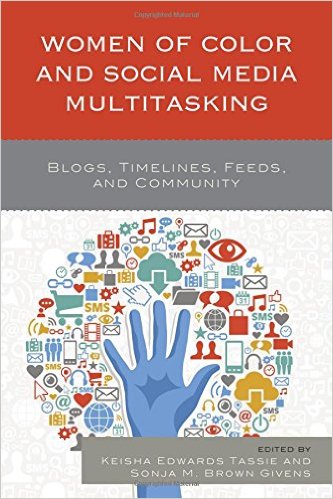
Dr. Charmaraman, Chan, Price, and Richer co-authored a chapter in the book, Women of Color and Social Media Multitasking: Blogs, Timelines, Feeds, and Community. The book is an edited collection of academic work that explores and analyzes social media use by women of color. The chapters address how and why women of color use social media to navigate the world and create virtual communities.
This study seeks to understand what long term effects of a cognitive-behavioral depression prevention program might have on a child after 6 years. The study found that adolescents who participated in the cognitive-behavioral depression prevention program seemed to experience less depressive episodes over time and were positively affected after 6 years.
This paper focuses on depression in adolescents--a common area of study in recent years. Treatment for depression in adolescents can be costly, and this study seeks to determine if an internet-based depression prevention study could prove to produce positive results and reduce costs. This paper describes an internet-based depression prevention program for primary care that implements aspects of the behavioral vaccine framework.
This study focused on children of parents with depression and two possible depression intervention strategies. The study compared a lecture based prevention strategy with a clinician-facilitated strategy. The study found that factors such as parent age, gender, and depression history all had an influence on the effectiveness of the strategies. This study could be useful for identifying which kind of strategy might be most beneficial for a particular family situation.
This book focuses on the mental health of children and the varied approaches necessary for treating many different children. There is no universal treatment that applies to every child. Tracy Gladstone, Ph. D., focuses within this book on the treatment and prevention of depression of children of parents with mental illness.
This book focuses on the ways in which mental illness in parents affects children and adolescents. The book also offers the best practices, review of recent literature on the topic of children of depressed parents, and an overview of current depression intervention strategies.
This brief report examined teenagers' sexuality communication with their parents and extended families. It compared who teens of early parents (those who had children when they were adolescents) and teens of later parents (those who were adults when they had children) talk to about sex. Eighth grade students (N"
Depression is prevalent in adolescents and the rate of successful treatment is low. This highlights a need for depression intervention strategies. This study suggests that internet-based prevention programs might prove useful in preventing depression in adolescents and be implemented into primary care practices.
Green and Wylie discuss the Keys to Degrees program at Endicott College, a campus-based program serving single parents and their young children. Students enrolled in the program have on-campus housing for their families, and their children are enrolled in high-quality child development programs or elementary schools. Green and Wylie review a decade of data, noting that 71 percent of Keys to Degrees students completed college in just four years. In comparison, the national rate for student parents who complete a degree or certificate program in six years is 40 percent. Alumni surveys showed that 100 percent of graduates were employed and 57 percent were earning an annual salary of $40,000 or more. Green and Wylie also explore challenges to replicating Keys to Degrees at other higher education institutions.
Researchers from the National Institute on Out-of-School Time (NIOST) at the Wellesley Centers for Women at Wellesley College studied the physical activity levels of 112 Kindergarten and First Grade children from September 2013 through May 2014 in Natick, Massachusetts. Fifty-two (n=52) of these children were participants in the BOKS before-school physical activity program and the others (n=60) comprised the comparison group. This study specifically examined time spent in sedentary, light, moderate, and vigorous physical activity (PA) during three waves of data collection.
The research findings highlight the potential benefits to youth who regularly engage in PA through a before-school physical activity program like BOKS. Previous research recommends selected cut points for daily steps for 6-12 year olds of 12, 000 and 15,000 steps for girls and boys, respectively. Achieving 1,807 steps during program time would account for approximately 15% and 12% of girls and boys recommended daily steps, respectively. Significant differences in mean daily step count and daily MVPA minutes at Time 3 suggest prolonged participation in a program such as BOKS can stimulate noteworthy differences in physical activity for participating children, including differences which persist on non-program days.
Despite increasing extended family involvement in child-rearing, particularly in minority families, few studies investigate their role in talking with teens about sex or how this relates to teens' sexual behavior. This mixed-methods study assesses extended family sexuality communication through a survey of 1,492 diverse middle school students and interviews with 32 students. Logistic regression shows that participants who report having had sex are more likely to report talking with extended family than those who report not having had sex. Interview themes explored reasons for and content of teen sexuality conversations with extended family. More sexually active teens' reporting communication with extended family is interpreted as extended family members gaining importance in sexuality communication as teens become sexually active.
Relational-Cultural Therapy (RCT) is developed to accurately address the relational experiences of persons in de-valued cultural groups. As a model, it is ideal for work with couples: it encourages active participation in relationships, fosters the well-being of everyone involved, and acknowledges that we grow through and toward relationships throughout the lifespan. Part and parcel with relationships is the knowledge that, whether intentionally or not, we fail each other, misunderstand each other, and hurt each other, causing an oftentimes enduring disconnect. This book helps readers understand the pain of disconnect and to use RCT to heal relationships in a variety of settings, including with heterosexual couples, lesbian and gay couples, and mixed race couples. Readers will note a blending of approaches (person-centered, narrative, systems, and feminist theory), all used to change the cultural conditions that can contribute to problems: unequal, sometimes abusive power arrangements, marginalization of groups, and rigid gender, race, and sexuality expectations. Readers will learn to help minimize economic and power disparities and encourage the growth of mutual empathy while looking at a variety of relational challenges, such as parenting, stepfamilies, sexuality, and illness. Polarities of "you vs. me"
There has been a remarkable growth of high quality empirical studies in the prevention of mental illness and the promotion of mental health over the past three decades. A series of reports (Institute of Medicine (IOM), Reducing risks for mental disorders: Frontiers for preventive intervention research, 1994; National Advisory Mental Health Council Workgroup, Blueprint for change: Research on child and adolescent psychiatry, 2001; Beardslee and Gladstone, Facilitating pathways: Care, treatment and prevention in child and adolescent mental health, 2004) has documented progress in the prevention of mental illness. More recently, the Institute of Medicine issued two new reports, one focused entirely on the prevention of emotional and behavioral disorders in youth (National Research Council and Institute of Medicine, Preventing mental, emotional, and behavioral disorders among young people: Progress and possibilities, 2009) and another with a specific focus on parental depression (National Research Council and Institute of Medicine, Depression in parents, parenting, and children, 2009). This progress has occurred through the definition of a set of rigorous standards for the conduct of research in prevention (e.g., testing of theoretically driven hypotheses, use of valid assessment instruments, blind assessment of subjects separate from intervention delivery, evaluation of outcomes over the long term, etc.), primarily using randomized trial designs. Yet, against the backdrop of successfully conducted prevention trials and efforts to promote mental health, virtually nothing has been written about the needs of caregivers who engage in prevention and health promotion and, in particular, what kinds of special supports they need. Caring for caregivers in prevention settings is absolutely essential to the success of preventive intervention efforts to date and will be even more important if such efforts are to be widely implemented in large-scale programs.
Available from: https://www.researchgate.net/publication/299675265_Mental_Illness_Prevention_and_Promotion
This study investigated whether or not adolescents who participated in an internet-based depression prevention program experienced positive results. The study found that factors such as the amount of time participants spent on the website, the strength of the relationship with their physician, the ease with which each participant was able to use the website, and the relevance of the material on the website to each participant had an effect on the results. The study found that internet-based depression prevention programs might be of use in the prevention of depression in adolescents and should be considered.
Abstract: Data from 1,364 children and families who participated in the National Institute of Child Health and Human Development's Study of Early Child Care and Youth Development were analyzed to track the early correlates and later academic outcomes of planning during middle childhood. Maternal education, through its effect on parenting quality when children were 54 months old, predicts their concurrent performance on sustained attention, inhibition, and short-term verbal memory tests. This performance predicts planning in first grade, which predicts third-grade reading and mathematics attainment, but not the rate of growth in academic skills from first to fifth grades. This path was also found when the same parenting, cognitive, and academic constructs were measured at later time points.
Abstract: The U.S. Census shows that the racial-ethnic makeup of over 9 million people (2.9% of the total population) who self-identified as multiracial is extremely diverse. Each multiracial subgroup has unique social and political histories that may lead to distinct societal perceptions, economic situations, and health outcomes. Despite the increasing academic and media interest in multiracial individuals, there are methodological and definitional challenges in studying the population, resulting in conflicting representations in the literature. This content and methods review of articles on multiracial populations provides a comprehensive understanding of which multiracial populations have been included in research and how they have been studied, both to recognize emerging research and to identify gaps for guiding future research on this complex but increasingly visible population. We examine 125 U.S.-based peer-reviewed journal articles published over the past 20 years (1990 to 2009) containing 133 separate studies focused on multiracial individuals, primarily from the fields of psychology, sociology, social work, education, and public health. Findings include (a) descriptive data regarding the sampling strategies, methodologies, and demographic characteristics of studies, including which multiracial subgroups are most studied, gender, age range, region of country, and socioeconomic status; (b) major thematic trends in research topics concerning multiracial populations; and (c) implications and recommendations for future studies.
School-based comprehensive sex education programs can reduce early adolescents' risky sexual behavior. The purpose of this study was to assess the effectiveness of a 3-year comprehensive sex education program in delaying vaginal sex for middle school students and whether the family component of the intervention contributes to its effectiveness.
This longitudinal evaluation followed a cohort of 2,453 6th graders through the end of 8th grade. The design used a random assignment of 24 schools into treatment and comparison conditions. The analysis included multiple-group logistic regression to assess differences in the delay of sex between intervention and comparison groups.
In schools where the program was taught, 16% fewer boys and 15% fewer girls had sex by the end of 8th grade compared to boys and girls at comparison schools. Completing family activities during the first year of the program predicted delayed sexual debut for boys.
Theory-based, developmentally appropriate, comprehensive sex education programs that include parent involvement can be effective in delaying vaginal sex for middle school students. Parent involvement is particularly important for boys, as family activities may encourage parents to talk with their sons earlier and more frequently.
Parents, educators, youth development workers, researchers, and policymakers are increasingly concerned with internet safety as social media becomes more popular. This research paper highlights a study designed to understand how young people describe how much (or how little) their social media use is monitored at home. This includes who is doing the monitoring, when, why, and how. This study looked at 33 middle school youth (aged 11-14) who were also participating in a 9-week sexual health curriculum. Teens reported that their parents were most concerned about "friending"
Abstract: The authors review systematic national programs that are effectively helping children break the cycle of depression and other mental health problems in families.
The effects of minority and undocumented immigrant status combined with poverty pose a set of unique psychiatric risk factors. Restrictive legislation and policy measures have limited access to health care and other basic human services for undocumented immigrants and their children. Despite the need for mental health support, undocumented immigrants underutilize mental health services as well as other social services and supports. Undocumented status results in an invisible class of people who suffer from significant challenges combined with limited access to services that can assist them. Continue reading
 Foreword by Peggy McIntosh: Teaching about Privilege: Transforming Learned Ignorance into Usable Knowledge
Although scholarly examinations of privilege have increased in recent decades, an emphasis on privilege studies pedagogy remains lacking within institutions. This edited collection explores best practices for effective teaching and learning about various forms of systemic group privilege such as that based on race, gender, sexuality, religion, and class. Formatted in three easy-to-follow sections, Deconstructing Privilege charts the history of privilege studies and provides intersectional approaches to the topic.
Drawing on a wealth of research and real-life accounts, this book gives educators both the theoretical foundations they need to address issues of privilege in the classroom and practical ways to forge new paths for critical dialogues in educational settings. Combining interdisciplinary contributions from leading experts in the field-- such as Tim Wise and Abby Ferber-- with pedagogical strategies and tips for teaching about privilege, Deconstructing Privilege is an essential book for any educator who wants to address what privilege really means in the classroom.
To examine whether state child care subsidy policies can combine goals of increasing maternal employment and increasing access to quality child care for children in low-income families, we studied one state's comprehensive policy, through a cross-sectional survey of 665 randomly selected families using centers, Head Starts, family child care homes, public school preschools or informal care, including a sample of families on the waitlist for child care subsidies. We found that, in Massachusetts, families receiving child care subsidies report greater access to child care, more affordable child care, and higher quality child care, than do similar families not receiving subsidies. Lower-income families not receiving subsidies can sometimes access affordable, quality child care through Head Start programs and public preschools, but, when they have to pay for care, they pay a significantly greater proportion of their income than do families receiving subsidies. We also found that families on the subsidy waitlist are at a particular disadvantage. Waitlist families have the greatest difficulty paying for care, the least access, and the poorest quality child care. While the child care subsidy policies benefited those families receiving subsidies, families outside the system still struggled to find and afford child care.
Abstract: This study longitudinally investigates the relationship between adolescent/mother religious discordance and emerging adult sexual risk-taking 6-7 years later. We used Social Control Theory to examine the level and direction of concordance using data from Wave I and Wave III of the Add Health Study, focusing on constructs of religious importance, frequency of prayer, and attendance at religious services. We found that higher levels of adolescent/mother discordance in religious importance were related to increased emerging adult sexual risk-taking compared to those with similar levels adolescent/mother religiosity, but this occurred only when mothers reported higher levels of religious importance than their children. In contrast, adolescents reporting higher frequency of prayer than their mothers reported lower levels of sexual risk-taking than those with similar frequency of adolescent/mother prayer. These findings suggest that the protective effects of family religious socialization can be interrupted. However, this influence of religious difference on sexual risk-behavior operates differently depending on the direction and level of religious difference. Even in emerging adulthood, a period marked by distance from childhood values and institutions, religious difference with a parent remains a meaningful influence.
Children of depressed parents are at high risk for experiencing depression themselves. The purpose of this study was to determine if the positive effects of a group cognitive-behavioral program (CBP) might last multiple years. The study found that CBP had a positive effect on children of depressed parents when compared to usual care and that these effects lasted up to 3 years.
This project provided a comprehensive picture of the quality of Boston's Early Care and Education programs for infants, toddlers, and preschoolers, in both centers and family child care homes. Read the Executive Summary.
Final report also available at: Boston EQUIP
Abstract: The firm is almost entirely absent from models of immigration, and yet firms play a central role for high-skilled immigration. The H-1B visa program, for example, is a firm-sponsored entry where firms are responsible for every stage: from identifying the immigrant, to employing them, to filing for permanent residency on behalf of the immigrant. This central role of firms for high-skilled immigration suggests the traditional lens for evaluating the impact of immigration on natives through local area labor markets or national age-education approaches may miss important dynamics. We analyze the employment and wage trajectories of high-skilled workers born in America when a high-skilled immigrant arrives at their work site. We use linked employer-employee data during the 1995-2008 period from the Census Bureau for this exercise, which identifies the immigration status and country-of-birth of workers. We follow the subsequent career path of workers after high-skilled immigration occurs to the employee's work site both within firms (e.g., changes in employee salary, relocation to other sites) and across firms (e.g., movements to new jobs or out of workforce, long-term salary adjustments). The richness and depth of the Census Bureau data allow for multiple comparison points: selection on observables (e.g., age, tenure, salary levels and recent growth), varying immigration treatments across different work sites for the same firm for otherwise comparable employees, and (for a subset of cases and short time period at the end of our sample) randomization in H-1B admission lotteries.
Early sexual activity can undermine adolescents' future school success and health outcomes. This study assessed the role of a family homework component of a comprehensive sex education intervention in delaying sexual initiation for early adolescents and to explore what social and contextual factors prevent adolescents from completing these family homework activities. This mixed-methods study included 6th- and 7th-grade survey responses from 706 students at 11 middle schools receiving a sex education intervention, as well as interviews from a subset of 33 7th-grade students from the larger sample.
Adolescents who completed more family homework assignments were less likely to have vaginal intercourse in 7th grade than those who completed fewer assignments, after controlling for self-reports of having had vaginal intercourse in 6th grade and demographic variables. Participants' explanations for not completing assignments included personal, curriculum, and family-based reasons.
Family homework activities designed to increase family communication about sexual issues can delay sex among early adolescents and contribute to school-based sex education programs. Successful sex education programs must identify and address barriers to family homework completion.
Abstract: This study fills a gap in the literature by examining how school staff members view bullying and sexual harassment and their role in preventing both. Given recent legislation, increasingly more attention is paid to bully prevention; however, student-on-student sexual harassment is less addressed. Four focus groups were conducted with 32 staff members from 4 midwestern public middle schools. Questions assessed professional development opportunities on bullying and sexual harassment prevention/intervention, personal definitions of these behaviors, and their perceptions of school norms regarding such behavior. Staff members recalled receiving more professional development on bullying than sexual harassment. They tended to define sexual harassment as something that occurs between adults and/or adults and students and did perceive their role in enforcing a "sexual harassment-free" peer-to-peer school zone. When school administrators fail to provide professional development on both bullying and sexual harassment, staff members do not understand that sexual harassment occurs between students. Thus, they are unaware of policies to protect students from harmful experiences in educational settings and are not likely to understand their own role in preventing them.
Page 4 of 6
 | Wellesley Centers for Women 781.283.2500 |
Copyright © 2026 Wellesley Centers for Women, Wellesley College | Privacy Policy
